
In Process With: Kat Chow
"In order to be able to narrow my implied question, that exigency that propels it, I need to train myself to make the sounds—I need to find the natural pitch of my writing and thoughts on this topic."


Welcome to the 2025 season of In Process With…! where I ask writers how the work’s going and they graciously give us the truthful answer.
We have a new third question this year: “What’s keeping you going?”
I want to know how folks stay in it for the long haul, what allows them to return to their desks and projects. This is an evergreen question, but it does feel like 2025 needs this question in particular, doesn’t it?
If you’re not yet a paying subscriber and want to know how Kat and others will answer that question this year, you can become one by clicking on this button right here:
If you’d like to become a paying subscriber but cannot afford it right now, please let me know and I’ll comp you six months or year, no questions asked. Just hit reply and send me a note for how long you’d like it for.
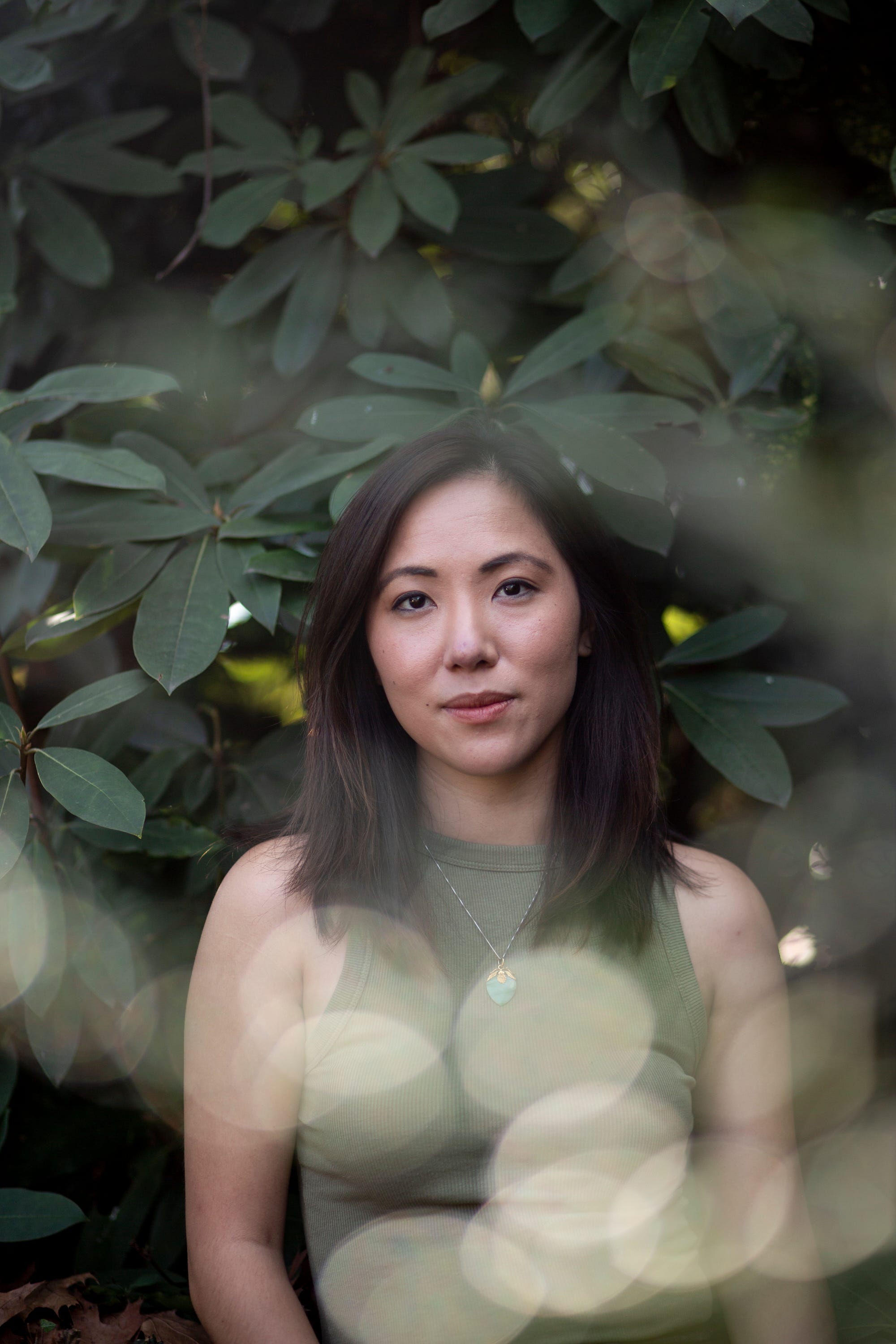
Over the moon to kick off 2025’s In Process With… series at the desk of Kat Chow, author of one of my favorite memoirs, Seeing Ghosts, journalist, teacher, and former student, which makes this feature even more delicious. I first met Kat in person in one of my fiction workshops at Catapult; she was newer to fiction, but her work was so damn good, and her presence in the workshop—both her talent and demeanor—foretold all the stunning, important writing we’d get from her in the following years.
Kat brings a reporter’s eye to her writing, by which I don’t mean by incorporating facts (though those are woven seamlessly in her work when she wants them) but by an ever-present curiosity. We talk a lot in writing classrooms about how it’s your job as the writer to take the hand of the reader and invite them to follow you nearly blindly, to gain their trust and guide them, and Kat does this better than most. She digs via sentences, opening the world wider for readers, somehow both gently and without allowing us to look away from what might be hard to really look at.
When thinking about how to introduce Kat’s work, I thought of Edwidge Danticat’s The Art of Death, which I’m currently in the middle of, of how Danticat speaks of writing specifically about one person as the only way to move towards a comprehension of the unavoidable universality of death, and of how writing about death is writing about living, and about this line in pariticular: “We write about the dead to make sense of our losses, to become less haunted, to turn ghosts into words, to transform an absence into language.”
Seeing Ghosts is not just about Kat’s mother’s death, but about her mother herself, about Kat’s father, about her extended family, about the tendrils that grow from families generally, green and tender and reaching and also weighted with their own absences and losses. The memoir is about the ways that death touches us while we live on, asks us to not see a life as contained to its mortal moments or in a single body, but through the larger body of a family, into the time beyond and also before a death. Kat does this all with an incredible presence as our narrator, a resistance to neat answers and yet without any hint of nihlism. The book inhabits the space of both seeing the arc and impact of her mother’s death and not being able to make ultimate sense of it, because how can that be made sense of, why would you want to?
On a craft level, there is an endless movement through possiblities and timelines; Kat is particularly skilled at being in a moment with a family member on the page as though it’s happening in real time, as though she had somehow written it down moments ago, and then as quickly jumping ahead or back in time to layer in a connection to the scene. This connective instinct is what makes Kat’s work—whether about her personal history or language attrition or profiling another writer—so pleasurable and easy to follow. We know we are in good, thoughtful hands, hands that are always reaching out to grab a few things that belong together, in ways that seem, after you’ve finished, to form a new thread through the universe.
How amazing after thinking this to find that Kat’s answers are about finding language, about connectedness, about the vitality of curiosity.
You might already be familiar with Kat’s voice, as I was, before I knew her as a writer. A reporter at NPR, she was a founding member of the Code Switch team and podcast—I cannot count how many times I’ve sent her episode on dogs and racism to people, for one episode you should listen to among many—and is a contributor to Pop Culture Happy Hour and Slate’s Culture Gabfest, and has hosted Slate’s The Waves. Her work has appeared in The New York Times Magazine, The Atlantic, The Paris Review, New York Magazine’s The Cut and on Radiolab, among others. She’s received residency fellowships from Storyknife, Millay Arts and the Jack Jones Literary Arts Retreat. She is The George Washington University’s 2024-2025 Jenny McKean Moore Writer-In-Washington, where she teaches Creative Nonfiction. You can find her (and the beagles, who you’ll get to see below!) on Instagram here and read a brief excerpt from the memoir here.
-Danielle
What have you been working on this week?

 | A guest post by
|